
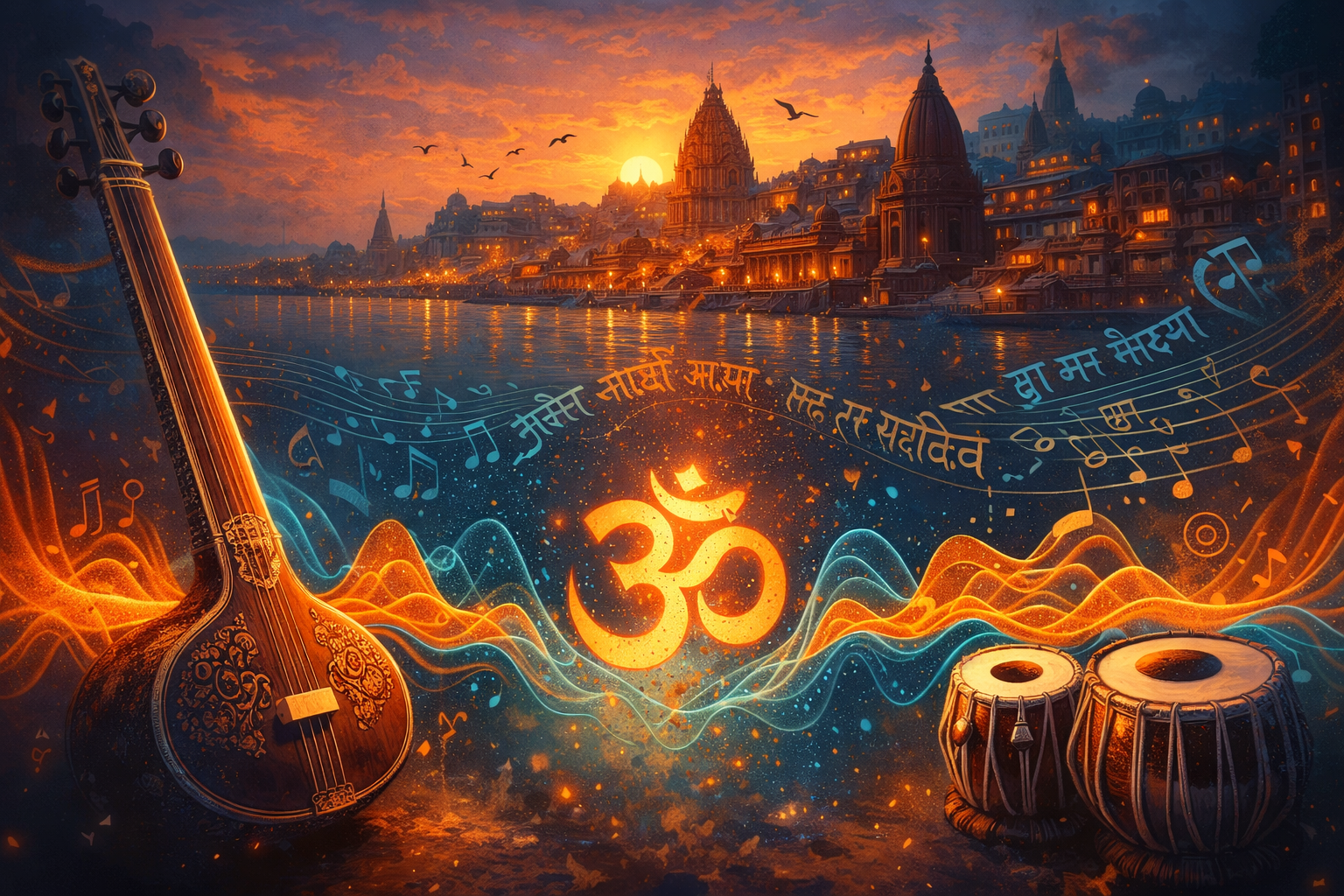
The Eternal Symphony of Kashi
Varanasi, or Kashi, is not just a visual spectacle but a profound auditory experience. The city breathes through its sounds—the resonant chants of mantras, the hypnotic beats of the damru, and the classical strains of Dhrupad echoing from hidden courtyards. This soundscape is the very pulse of the spiritual capital of India.
To truly understand Kashi, one must close their eyes and listen. The air here is thick with vibrations that have connected mortals to the divine for millennia. This guide explores the three pillars of Kashi’s soundscape: Mantras, Music, and the enduring Art of Dhrupad.
The Resonance of Mantras: Kashi’s Spiritual Pulse
The sound of chanting is the heartbeat of Kashi. Unlike the silence of meditation sought elsewhere, Kashi embraces the loud, collective recitation of sacred texts.
Significance of Sound in Kashi
According to ancient traditions, the geography of Kashi is aligned to amplify spiritual vibrations. The Maha Mrityunjaya Mantra and the Gayatri Mantra are heard constantly near the ghats and temples. Locals believe that hearing these mantras in Kashi carries a merit that cannot be quantified.
The Kashi Vishwanath Temple Chants
At the Kashi Vishwanath Temple, the atmosphere is charged with the rhythmic chanting of “Om Namah Shivaya.” During the Shringar Puja (Morning Ritual), the soundscape is delicate and intimate, a stark contrast to the thunderous aarti held later in the day. Pilgrims often stand outside the sanctum merely to absorb the sonic energy of these rituals.
The Art of Dhrupad: Classical Echoes in Ancient Alleys
Kashi is the custodian of Dhrupad, the oldest surviving form of Hindustani classical music. While other genres evolved, Dhrupad remained rooted in the spiritual discipline of the Brahmins (priestly class) and the Baani Gharanas (musical lineages) of the city.
Origins and Evolution
Originating from the Sanskrit Dhrut (fast) and Pada (verse), Dhrupad was initially sung in temples as an offering to deities, specifically Lord Vishnu and Lord Shiva. The Dagarbani style of Dhrupad, deeply meditative and pure, finds its spiritual home in Varanasi. It is characterized by precise rhythms and deep, vibrating bass notes produced by the tambura.
Where to Listen to Authentic Dhrupad
Unlike the commercial concerts of Mumbai or Delhi, Dhrupad in Kashi is often a community affair. The primary venue is the Dhrupad Mela, held annually at the Tulsi Ghat. Additionally, one can often hear soulful renditions at:
- Tulsi Ghat: The historical center of Dhrupad.
- Ramnagar Fort: During the evening Ramleela festivities.
- Private Havelis: Many old families host morning riyaaz (practice sessions) that can be heard from the street.
Ghats: Where the River Breathes Music
The ghats of Varanasi are open-air concert halls. The soundscape changes with the rising and setting of the sun.
The Morning Drone
At dawn, the soundscape is organic: the splash of oars, the bells of passing rickshaws, and the low hum of priests setting up for the morning rituals. This is the time to walk the ghats and hear the Shankh (conch shell) being blown—a primal sound that marks the start of the day.
The Evening Ganga Aarti
The Ganga Aarti at Dashashwamedh Ghat is a symphony of sound. It combines the ringing of large brass bells, the chanting of Vedic hymns by a chorus of priests, and the rhythmic striking of large drums. The synchronization of the priests’ movements with the sound creates a sensory overload that is deeply transformative. The sound of the Shankh here is the loudest and most piercing, cutting through the din of thousands of spectators.
Practical Guide for the Aural Traveler
To fully experience the soundscape of Kashi, timing and location are crucial. Here is a practical guide to navigating the sonic environment of the city.
Best Time to Visit
The ideal time to visit for musical and ritualistic experiences is between October and March. The weather is cool, allowing for comfortable walking, and the calendar is packed with festivals.
- Kartik Purnima: Features the grandest Aartis.
- Shivratri: A night of non-stop chanting and drumming throughout the city.
Dress Code and Etiquette
While there is no strict dress code for watching the Aarti or listening to Dhrupad at the ghats, modesty is appreciated. Wear clothes that cover shoulders and knees. If you wish to enter a temple or get close to the Aarti fire, remove footwear and cover your head (scarves are often available for rent).
Photography and Recording
Photography is generally permitted at the ghats but is restricted inside the Kashi Vishwanath Temple sanctum. When recording the Aarti or Dhrupad, do so silently. Avoid using flash, as it disrupts the priests’ focus. Be mindful of devotees; their spiritual experience takes precedence over tourism.
Local Insights and Secrets
Locals know that the best way to absorb the sounds is to sit at a specific spot and let the city wash over you.
The Secret of Manikarnika Ghat
While Manikarnika is famous for cremation, its soundscape is unique. The chanting of Ram Naam (the name of God) is constant here, performed by priests to assist the soul’s transition. It is a profound, sobering, and spiritually intense sound, distinct from the celebratory sounds of the other ghats.
Hidden Musical Gems
Ask a local guide about “Baithaks” (private musical gatherings). If you are lucky, you may be invited to one where masters of Dhrupad perform in intimate settings, usually in the early morning or late night. These are not tourist events but pure cultural sharing.
FAQs: The Soundscape of Kashi
The best time is the transition periods: dawn (4:00 AM to 6:00 AM) for the morning chants and the Shankh, and dusk (6:00 PM to 7:30 PM) for the Ganga Aarti. For Dhrupad, the winter mornings at Tulsi Ghat are ideal.
Yes, the Dhrupad Mela (usually held in February) is a public festival. It is free to attend and takes place on the steps of Tulsi Ghat. It attracts serious music lovers from around the world.
Watching is open to all. However, active participation (holding the lamp or flowers) is usually reserved for priests and specific donors. You can witness the ritual from the steps, but do not obstruct the path of the priests carrying offerings.
Conclusion
The soundscape of Kashi is not mere noise; it is a mechanism for transcendence. From the guttural drone of Dhrupad to the collective roar of the Ganga Aarti, every sound in Varanasi is designed to pull the listener away from the mundane and toward the eternal. To visit Varanasi is to witness a living library of acoustic heritage, where the art of sound remains inextricably linked to the art of living.
Leave a Reply