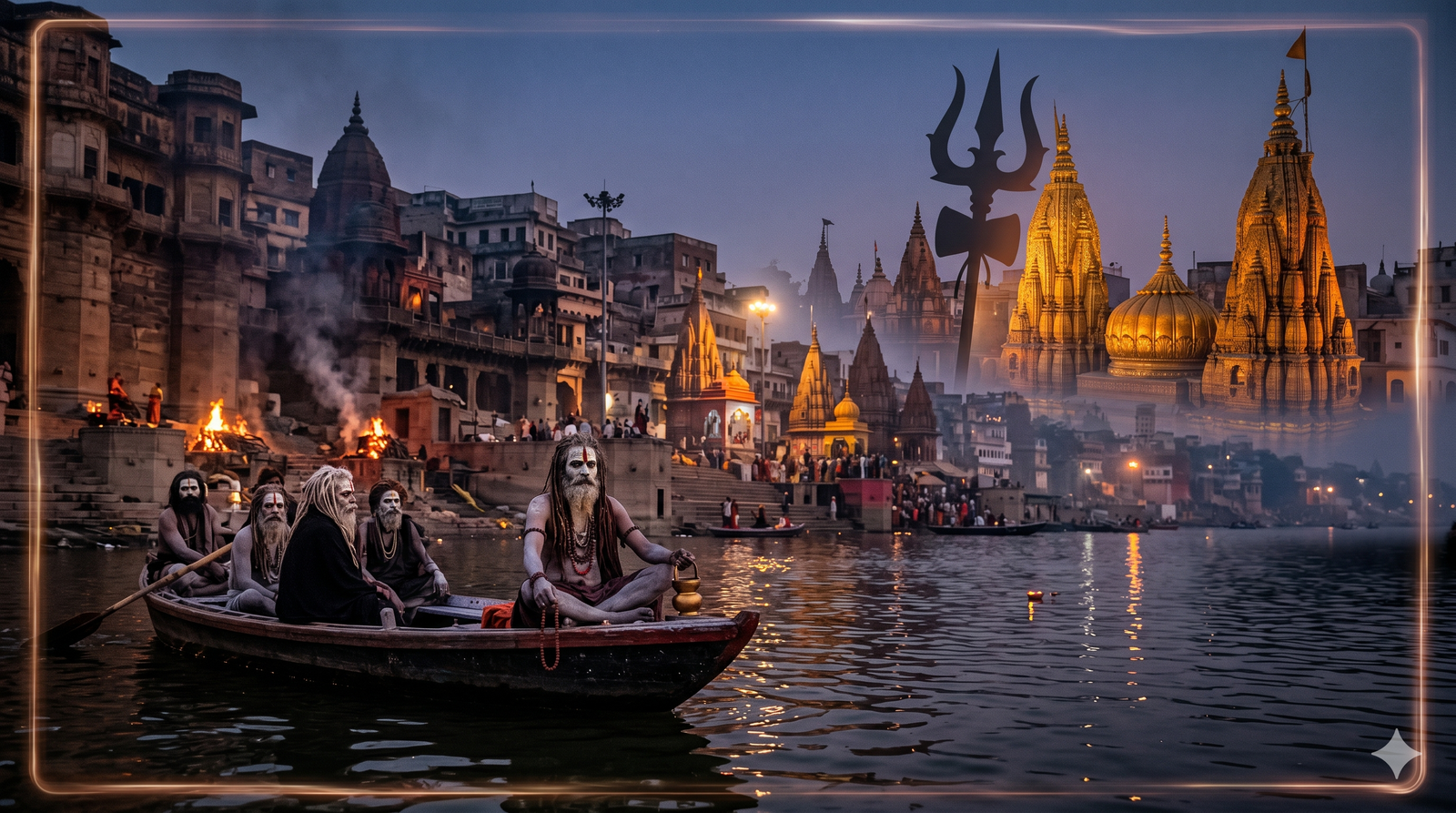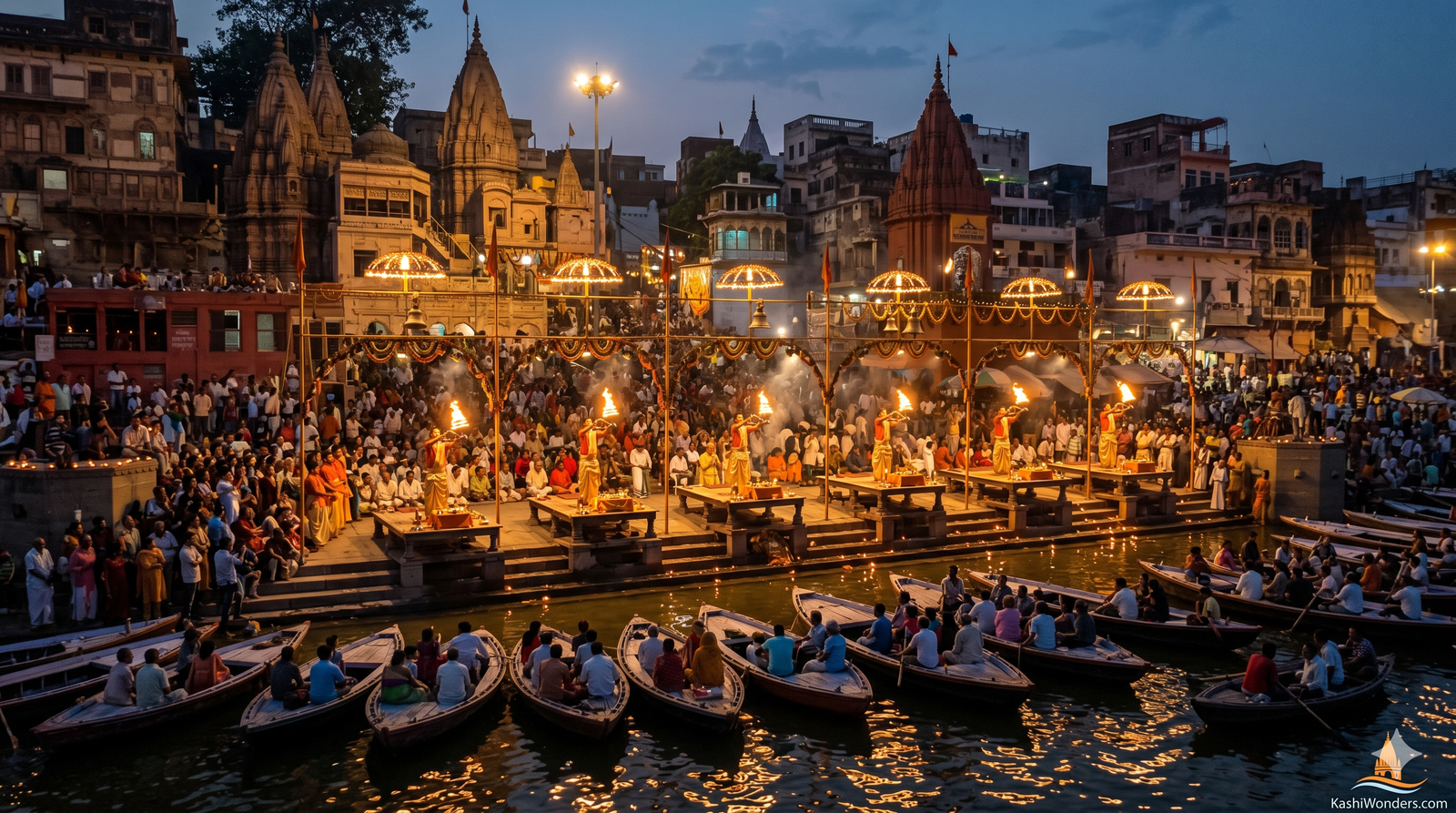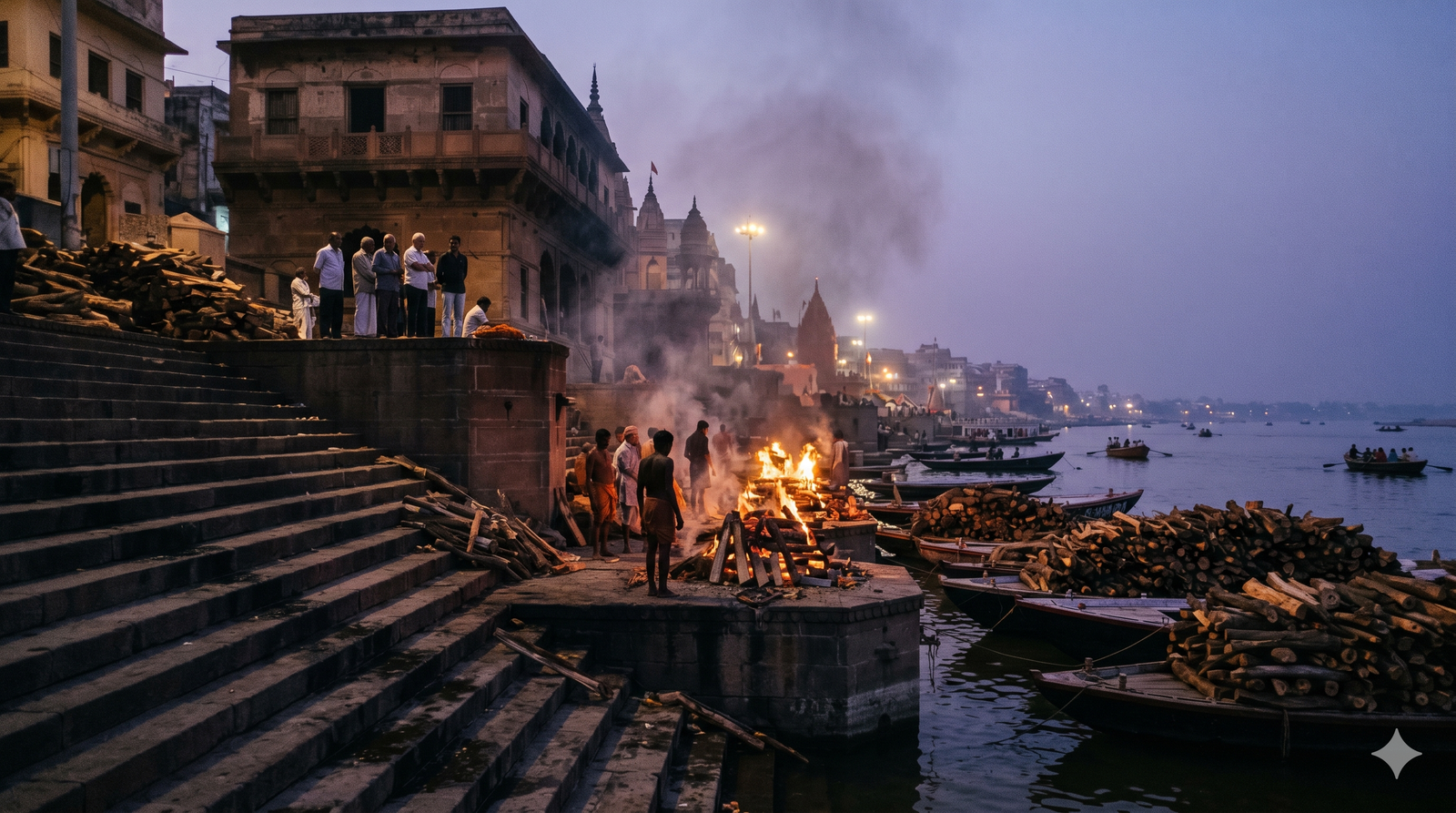
While the rest of the world turns away from death, Kashi looks it straight in the eye. To walk through the narrow, wood-stacked lanes leading to Manikarnika is to witness the city's most raw and unfiltered truth. This isn't just a site for funerals; it is the threshold where the physical body meets the five elements under the watchful gaze of Lord Shiva.
Manikarnika: The Eternal Fire of Shiva
Manikarnika is the primary burning ghat and one of the oldest in the city. Legend says that Sati’s ear ornament (Manikarnika) fell here, or that Lord Vishnu dug a pit with his Chakra while Shiva watched.
When you stand on the upper platforms, you’ll notice a small pond—the Manikarnika Kund. Even as the smoke rises from the pyres, devotees bathe here, believing the water was created by Vishnu himself. The fire here is said to be eternal; it hasn’t been extinguished for thousands of years. You will see "Dom" community members—the traditional keepers of the flame—tending to the pyres with a practiced, stoic dignity.
Harishchandra: The Ghat of Truth
Smaller and quieter than Manikarnika, Harishchandra Ghat is named after the legendary King Harishchandra, who worked here as a lowly cemetery keeper to uphold Satya (Truth).
While Manikarnika feels like a whirlwind of activity, Harishchandra offers a more somber, reflective atmosphere. It is also home to an electric crematorium, a modern contrast to the traditional wood pyres. Local families often choose this ghat for its historical significance and slightly less crowded surroundings.
Etiquette: Navigating the Mahashmashana
Visiting these ghats requires a level of sensitivity that goes beyond standard tourism.
- Strictly No Photography: Taking photos of the burning pyres is considered deeply disrespectful to the grieving families. It’s best to keep your phone or camera inside your bag entirely.
- Maintain Silence: You are effectively at a funeral. Avoid loud conversations or "vlogging" in the immediate vicinity of the flames.
- The "Scams" to Avoid: You will likely be approached by men claiming to collect money for "charity wood" for the poor. Politely decline and keep moving; these are well-known tourist traps.
🕯️ The Insider’s Secret
For a perspective that is respectful yet panoramic, view the ghats from a boat on the Ganga at sunset. Do not ask the boatman to go too close; staying about 50-100 meters away allows you to witness the flickering orange glow of the pyres against the darkening sky without intruding on the private grief of the families.
Practical Essentials
| Detail | Information |
|---|---|
| Best Time to Visit | Early morning or just after sunset for the most evocative atmosphere. |
| Entry Fee | Free (Public Space). |
| Dress Code | Modest. Shoulders and knees should be covered. Avoid bright, flashy colors. |
| Accessibility | Best reached by boat or by walking the riverside path from Dashashwamedh Ghat. |
FAQ: Understanding the Rituals
Q: Is it safe for tourists to visit the burning ghats?
Yes, it is safe, provided you stay on the periphery and do not interfere with the processions. Stick to the upper balconies or the boat if you feel overwhelmed by the intensity of the scene.
Q: Why do people want to be cremated here?
It is believed that dying in Kashi or being cremated at these ghats grants Moksha—freedom from the cycle of rebirth. Lord Shiva is said to recite the "Taraka Mantra" into the ears of the departed here.
Q: How long do the fires burn?
At Manikarnika, the fires burn 24 hours a day, 365 days a year. It is a constant reminder of the city's title: the "Luminous City" that never sleeps.
Also Read
- The 5 Must-Visit Temples in Varanasi
- A First-Timer's Guide to the Ganga Aarti
- Understanding the Dom Community: The Keepers of the Flame